Facebook advertising is a booming business that shows no signs of slowing down. Every year, Fifteen million businesses spend billions on Facebook ads.
But how much impact is this money having? According to eMarketer, 96 percent of marketers consider Facebook the most effective social media advertising platform based on proven ROI. And why? Of Facebook’s two billion monthly users, the average person spends at least 50 minutes a day on one of Facebook’s products – more than any other network.
Whether you’re trying to increase brand awareness, drive sales and leads, or all of the above, Facebook ads can assist you in achieving your business goals at every customer journey stage.
1: Increase brand awareness through ads

Use Facebook’s powerful targeting to grow your audience.
Before you can win someone over, you need to grab their attention. Facebook’s colossal user community means your brand’s message has the potential to achieve a broad reach – but you can only rely on those big numbers to do some of the work for you. Only two percent of a brand’s audience sees its organic posts on Facebook. Combining paid and organic Facebook posts with driving engagement, traffic, and conversions would be best.
Help people find your products.
Facebook has features specifically designed to help people discover your products and engage with your business:
1. brand awareness campaigns
2. reach campaigns
3. unique ad formats
4. brand analysis
Campaigns to increase brand awareness
Increasing discoverability is the first step to building a strong.
Build brand and increase sales with Facebook’s brand awareness campaigns, you can promote your company in the place where people find new things – and where they’re already in discoverability mode.
Select the “brand awareness” goal in your Facebook advertising dashboard to increase discoverability. This optimization for brand awareness combines reach and attention to ensure your ads are delivered to the people most likely to respond – and higher Ad recall. Before you create an ad with “brand awareness” in mind, you should take note:
- Brand awareness optimization can be found in Ads Manager.
- Placements under consideration include Facebook, Instagram, and Audience Network
- You can use image, video, slideshow, and carousel ad formats.
- Like other optimized cost-per-thousand-impressions (CPM) bid types, you’ll be charged by impressions.
Facebook tip: To avoid overspending, use only one placement (Facebook Mobile News Feed, Instagram, etc.) per ad set and set a bid specifically for that placement. The CPM can vary significantly from placement to placement for the same target audience, so limit your brand awareness ads to one location.
Reach the right audience
If you wish to reach a broad audience, Facebook makes it easy. Use the “Reach” goal to reach the largest audience at the lowest cost.
Increase brand awareness and reach with eye-catching ad formats
Facebook’s various ad formats offer brands a solution for every business goal. If your main focus is to attract customers at the top of your sales funnel, consider two key ad formats:
Video ads: With 100 million hours of video watched daily on Facebook, video ads are a great way to connect with people. Video ads can be played as soon as they appear in a viewer’s News Feed so that they can engage your audience instantly.
Slideshows: Create engaging slideshows with your photos in just minutes and capture your audience’s attention with motion. Slideshows give you the benefits of video without the cost and time of production.
Measure brand awareness and reach
Facebook suggests specific metrics to measure the success of your ads optimized for brand awareness and reach.
Estimated ad recall (people): A new metric, estimated ad recall (people), estimates how many people will remember your ad after seeing it. It is computed by comparing the variety of people you reach and the amount of time they spend viewing your ads (attention) to historical information on the correlation of attention and reach with ad recall.
Brand performance metrics: When you run a brand campaign, metrics like reach, video views, and cost per video view (CPV) help you measure brand awareness and engagement and the associated costs. These metrics are a better measure of brand awareness than metrics like clicks and page likes.
2: Reach and optimize critical audiences

Reach the customers who are most likely to buy
Not all audiences are the same, so you need a comprehensive Facebook advertising strategy for optimal results. Once you’ve gotten in touch with your Facebook content and past ads, you’ll have meaningful data to optimize your targeting.
And remember: Before you launch a campaign, always have your conversions and goals in mind.
Track conversions and optimize ads with the Facebook Pixel
A Facebook Pixel – a code you place on your website – helps brands track conversions from Facebook ads, optimize ads based on the data collected, create audiences for future ads, and retarget qualified leads. It places and enables cookies to track user interaction with your website and Facebook ads. The targeting and retargeting features of the Facebook Pixel can help you make the most of your social ads budget.
Target specific devices
When creating your targeting strategy, you need to consider which devices (mobile or desktop) your audience is most active on. With device-specific targeting, you can first target ads to one device to increase brand awareness and then to another to drive conversions and close the sale. This way, you can be successful at every stage of the customer’s buying Journey.
Determine the type of device that is most likely to drive conversions, depending on your campaign goals. Consider your target audience and the devices they would most likely use based on their demographics and behavior patterns.
For example, if you’re trying to target app downloads, focus exclusively on mobile devices, as your potential customers are the most active and will make the conversion you want.
Increase sales with custom audiences
With Ads, you can use your existing audience data to create custom and lookalike audiences that will help you increase sales effectively.
Custom audiences
Custom audiences let you find specific target groups based on various data (e.g., email lists, data from CRM systems like My sales script, and people who have liked your Facebook page).
Use a custom audience if you like:
Reach people who visited a product page but still need to complete a purchase (to encourage them to return and do so).
Create an audience of all people who have visited your internet site in the last 30 days.
Same target groups
Once you’ve figured out what works for your custom audiences, you can create like audiences from this data and show them similar campaigns and offers.
First, identify your top engagers. Look at who likes your posts, leaves comments or feedback, writes reviews about your brand, and shares your page with their Facebook friends.
For your Facebook ads
To ensure you’re targeting the right people, you should list your highest converting customers based on transaction value, engagement with your brand, and lifetime value. Ideally, you should enter the data of several hundred or even a few thousand customers on Facebook .you want to create brand awareness and reach only your best potential customers – those with the highest lifetime value for your brand, which will keep returning to buy your products.
Use a similar audience if:
- Your main goal is brand awareness and attracting new customers.
- You want to grow in a new international market (e.g., by creating a similar audience based on your local customers)
Use retargeting to stay in the mind of potential customers
If you’ve ever visited an e-commerce website and been followed for days by a product ad, you know how effective retargeting can be.
Retargeting allows you to reach highly engaged members of your audience who are in the evaluation stage of the buying process. These people have interacted with your Facebook page or website in some way (e.g., by adding an item to their cart but not making the purchase added to the cart but did not complete the purchase), thus showing optimal engagement for your business.
Retargeting is also effective for cross-device optimization. For example, if you’re a business that offers a mobile product, you can target everyone who visited your site on the desktop in the last month with a mobile ad that includes a compelling call to action.
If your audience is on the optimal device, they are more likely to convert.
Formats that are suitable for retargeting:
Offer ads
For audiences between the review and purchase stages, offer ads are an effective way to drive conversion. You can create offer ads for everything from free shipping on a customer’s first purchase to a deluxe sample of a new product with every order.
Offers are a feature that must be enabled. You’ll find it when you create your Facebook ads under the Ads Set category.
Carousel Ads
You have several options when using carousel ads to increase conversions with retargeting. You can use carousel ads to highlight features that make your product stand out or to display a combination of products or services that are most relevant to users based on their past buying behavior.
Did they buy a new computer on your e-commerce site? Use carousel ads to show them a wireless keyboard, Bluetooth speaker, laptop stand, and screen cleaner. By displaying complementary products, you can both encourage more purchases and increase the average purchase value.
3: Test your ads at scale
Save time and money with strategic testing:
Any digital marketing strategy requires constant innovation and testing to achieve better results and stay ahead of the curve. Especially since Facebook itself
releases new products and features regularly. The following strategies are great ideas you can apply to your current or future campaigns to ensure you get the best results possible.
Use A/B testing to find the best-performing ads
Facebook ads are the perfect place to find out what resonates best with your audience – from format to image style and hashtags to length of text and tone of voice. Using the data you gather from testing, you can better predict what ad content will convert.
You can test many ad components to find out what works great for your audience, and with Facebook Ads, you can do this at scale.
Key areas to test include:
- Text: Test the length of your ad (number of characters), the style (a question or statement), the use of emoji, punctuation, and the tone of voice.
- Call to action: Try different ways to ask your audience to take action. For example, test whether “buy now” works better than “learn more.”
- Visual elements: Test different images and videos, text-only posts vs. posts with images, a regular image vs. a GIF, images of people or products vs. diagrams or infographics, and different video lengths.
- Format: Test different formats against each other, such as carousel ads, canvas ads, app install ads, video ads, lead ads, omnibus ads, slideshow ads, and regular photo ads.
4: Optimize your ads like a pro
Optimize your ads for mobile apps. Facebook’s App Event Optimization lets businesses serve mobile application install ads to individuals most likely to take a specific activity in your application.
For instance, you can select mobile app install ads optimized for purchases to attract customers most likely to purchase your app. Or, if you want a user to “add to cart” from your app, you can optimize your mobile app and install ads.
Optimize ads for that purpose:
Use lead ads to collect contact information
Lead ads are another efficient way for businesses to connect with customers in the acquisition phase of the buying process.
When Facebook users click on a lead ad, a form is displayed. Facebook automatically fills out this form with as much information about the user as possible (e.g., name, email address, and phone number, if provided), making it easy for users to purchase mobile and desktop.
Since lead ads give you a customer’s contact information, you can reach them with relevant email campaigns and targeted Facebook ads.
To create a lead ad, select the lead generation objective when creating your ad. This ad format is particularly effective as part of a retargeting campaign for audiences already familiar with your business, such as previous website visitors or people who have watched one of your videos.
Have viewed one of your videos. This way, your relevance score, and CTR stay high and your CPA as low as possible.
You can use lead ads to:
- Offer deals, coupons, and promotions
- Facilitate newsletter signups
- Provide information about new products, events, or updates.
- Contact prospects who express interest in your business.
5: Measure ad performance
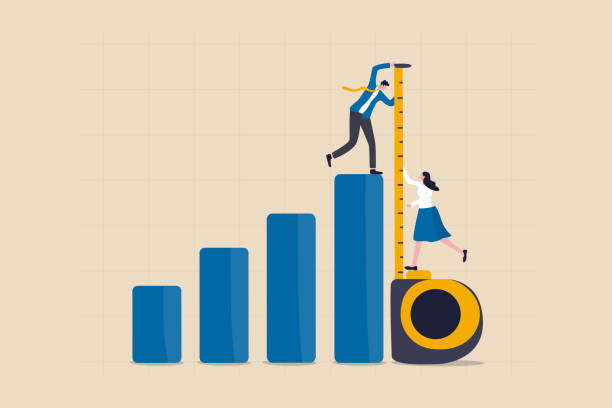
Paid social attribution and the metrics you can’t ignore
You don’t need to cut corners to get results. Measuring ad performance is the best way to optimize your Facebook ad budget effectively.
The key metrics every marketer needs to know When it comes to your ad costs, it’s essential to make sure you’re using your Facebook ad budget as efficiently as possible.
The following metrics will help you optimize your ad budget without sacrificing results:
Return on Ad Spend (ROAS): This metric refers to the total return on ad spend from website purchases. It’s based on the value of all conversions tape-recorded by the Facebook pixel on your website and attributed to your advertisements.
If you have implemented a formal purchase event on your website, this metric count when the Facebook Pixel tracks and assigns this event to your ads.
Relevancy score: Your relevance score tells you how relevant your ad is to your target audience. Facebook prioritizes ads with high relevance scores, lowering your CPC and the cost of your ads.
Click-through rate: A better click-through rate increases your relevancy score and lowers your costs. Improve CTR by using desktop news feed ad placements (which generate higher CTRs), appropriate CTA buttons, writing simple ad copy, and keeping frequency (the number of times a customer sees your ad) as low as possible.
Cost per Mille (CPM): That is the essential measure of advertising success on social media. Cost Per Mille (or thousand impressions) is a term that indicates the price of 1,000 ad impressions on a web page. For example, if you spend $50 and receive 10,000 impressions, your CPM is $5.
Cost per Acquisition (CPA): Cost per acquisition or cost per action describes the amount an advertiser pays when an ad results in a sale (or action). On Facebook, for example, the cost per action can be for “likes” on the page, taking advantage of an offer, installing a mobile app, and clicking a link.
That is the best way to measure success if your objective is to get your audience to take action beyond a click. For example, this is effective if you’re trying to get people to download protected content (which requires filling out a form), sign up for a webinar, or redeem a code.
Cost per lead (CPL): To identify the return on investment of a social advertising campaign whose goal is lead generation, you need to calculate the cost of acquiring a lead (cost per lead).
To determine the CPL, divide your ad spend by the number of leads generated during the campaign period. Your most successful campaigns will acquire high-quality leads at the lowest cost. Cost per lead is a variation of a CPA campaign, where a lead is a person who is likely to make a purchase or take action.
Advantages of advertising on Facebook
While it can indeed be argued that Facebook ads are less effective than they used to be, it’s still the social network with the most active users – not to mention that it also covers Instagram. That’s why targeting Facebook advertising strategies is essential to ensure you save your budget on ads that don’t contribute to your bottom line.
Facebook advertising offers some key advantages:
- Advanced options for targeting your ads to specific audiences.
- Smooth shopping integration
- Informative data analytics
- Among the most extensive socials media
- Accessibility to Facebook’s entire advertisement library
- Alternatives for every spending plan
You can make use of Facebook advertisements for both client purchases as well as retention. It’s an excellent means to raise brand understanding, reach out to new prospective customers, and also cultivate connections with individuals that already recognize your brand name.
Facebook uses three primary objectives you can pick from for every ad:
Awareness: Use this objective if you are new to business or advertising and marketing on Facebook and intend to target new customers. You can utilize this to release a brand-new product or promote an event.
Factor to consider: That is the following action in our Facebook ads journey – after your audience has created some awareness of what you use, you need to target them with ads that supply even more info. These advertisements drive involvement or assist you in gathering leads.
Conversion: The last step in the trip is to get customers to transform. That could mean they buy a product, or you want them to visit your website, get directions to your store, or fill out a form telling you their information.
There’s no guideline or tell-tale sign for when you should consider Facebook ads. Instead, the platform offers opportunities for almost any business and any budget.
Revisit and analyze your Facebook ad strategy
The most effective Facebook ads are constantly tweaked for performance, though you can set them up and then forget about them.
You must check your Facebook ads to discover what works and what doesn’t and then make modifications based on those findings. For example, evaluate Facebook video clip advertisements versus photo advertisements to see if one material type performs far better. Another optimization method for Facebook ads is to consider your ads’ expense. You can adjust bids and audiences to reduce the cost per click (CPC).
Facebook Ads Strategy FAQ
Q: Which strategy should I make use of for Facebook advertisements?
A: You can make utilize of any one of the five strategies in this message for Facebook advertisements:
- Customize your ads by targeting specific target markets
- Support repeat consumers through customized Facebook audiences.
- Expand your market via “lookalike” targeting
- Retarget previous site visitors to your Facebook or Instagram web pages
- Take a look at your competitors in the Facebook ad collection
Q: What is one of the most effective Facebook ads?
A: One of the most reliable Facebook advertisements is targeted to a specific audience, is frequently maximized to improve efficiency, and is integrated into a straightforward e-commerce marketing technique.
Q: What makes a good Facebook ad in 2023?
A: A good Facebook ad in 2023 is targeted to its audience and optimized for multiple devices.
Q: What is the best optimization for Facebook ads?
A: The best optimization for Facebook ads is to use the dynamic ads option. Facebook automatically uses the best-performing ads to promote your campaigns.
Did you enjoy the post? Fast-track implementation by purchasing our Facebook Ads template so you can skyrocket conversions contact us at MySalesScript.com.